Spray Foam Insulation Removal Explained: Why Expert Handling Is Non-Negotiable
Spray foam insulation is one of the most common materials used in residential and commercial construction in the United Kingdom. Its ability to plug gaps, cut heat loss and enhance energy efficiency made it hugely popular, especially during the boom years of government-backed energy improvement initiatives. But what was touted as a revolutionary solution has in many cases become a serious issue. The necessity for spray foam insulation removal is now a reality for many of households, regardless of whether the foam was put improperly, deteriorated over time, or produced unforeseen structural problems. It is important to understand that this is not something that the inexperienced amateur should attempt. Spray foam insulation removal is a dangerous and difficult task that requires professional experience, specialised equipment and a grasp of the hazards involved.
The Nature of the Material Per Se
To understand why spray foam insulation removal is so difficult, it helps to know what it is. Spray foam is applied in a liquid form that expands quickly and hardens into a stiff or semi-rigid solid. This expansion means it can fill every crack and crevice in a roof space or wall cavity, which is exactly what makes it such an efficient insulator. But that same quality is precisely why it’s so hard to get rid of. Once dried the foam adheres tenaciously to timber rafters, roof felt, brickwork and other structural details. Trying to remove it without the right understanding might seriously harm the same parts it is glued to.
Often spray foam insulation removal involves a mix of mechanical cutting, controlled tugging and careful scraping to extract the material without breaking rafters, shredding roofing felt or disrupting the underlying structure. The experienced contractor will examine the type of foam you have , whether it be open-cell or closed-cell , and modify their method accordingly . Open-cell foam is usually softer and more flexible, but closed-cell foam is much denser and more tightly linked, frequently necessitating more rigorous procedures. Without this diagnosis step, an inexperienced person risks greatly aggravating the condition.
Structural Risks Requiring Professional Assessment
One of the more important reasons to enlist a competent expert for spray foam insulation removal is the potential for structural damage. Foam can damage roofing timbers that may already be stressed, especially in older homes where foam may have been there for many years. Some spray foams can trap moisture against timber and can cause rot which may not be immediately apparent. A specialist will undertake a full structural examination before any work starts, identifying any damaged timbers and advising corrective action if required.
If an unskilled individual removes spray foam insulation, they may unknowingly damage already delicate roof felt, split or break rafters under too much pressure or disturb asbestos-containing components in older homes. Each of them can lead to large additional expenses and, in the case of asbestos, major health problems. A qualified specialist knows how to recognise such dangers and how to deal with them within the scope of existing health and safety laws.
Health and Safety Concerns
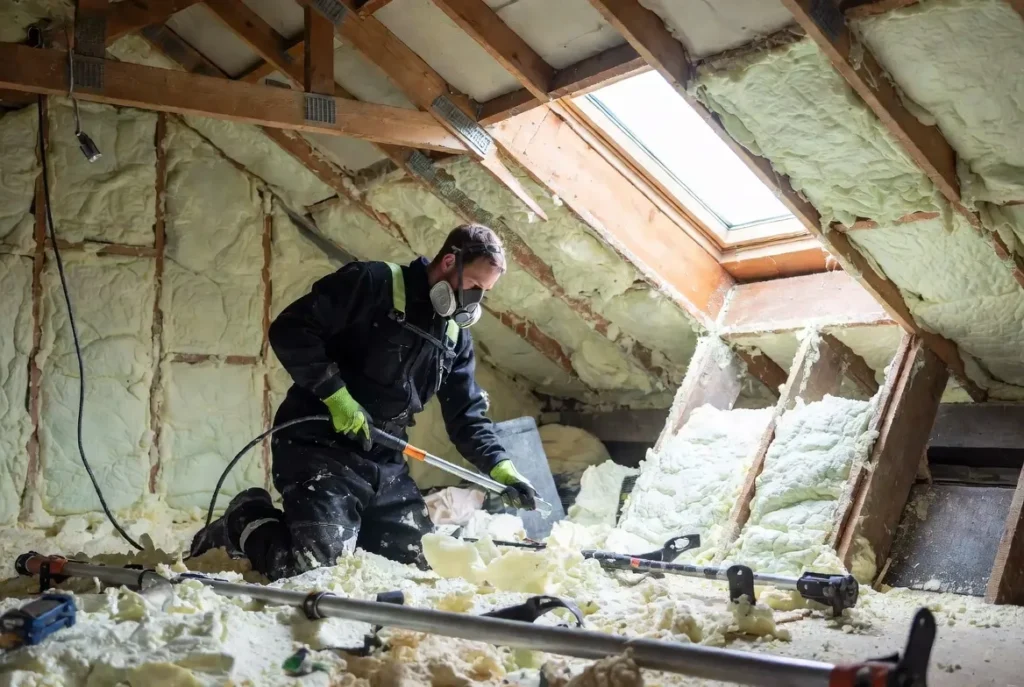
Don’t underestimate the health risks of spray foam insulation removal. Cured spray foam can create small particle dust when physically disturbed which can be dangerous if breathed. Prolonged contact to this dust without adequate respiratory protection can irritate the airways and depending on the composition and age of the foam may be more hazardous to health. Professional spray foam insulation removal professionals will be taught to utilise proper personal safety equipment, such as respirators with particle filtration ratings, protective dungarees, eye protection and gloves.
There are also other concerns while operating at height in limited places such as the loft areas beyond the dust. Professional operatives are trained in working at height rules and will use suitable access equipment to guarantee their personal safety and the safety of the inhabitants of the home. The very real risk of falls, respiratory injuries, and skin irritation from contact with foam particles exists for a homeowner who attempts spray foam insulation removal without this training and equipment.
Effect on Mortgage and Property Value
Spray foam insulation removal is a financial requirement for many homes, not just a matter of desire or aesthetics. Mortgage lenders in the UK have been more wary of buildings with spray foam insulation, with many refusing to lend or setting harsh restrictions until the foam is removed. Our surveyors are also raising the issue of spray foam in their reports, which can scupper home deals and cause major delays.
When it comes to a mortgage lender or surveyor, spray foam insulation removal has to be up to a clearly competent quality. This usually involves choosing a contractor who will offer proof of their credentials, their technique of working and a written report stating the removal has been done properly and the roof space has been examined for any remaining damage. These standards will seldom, if ever, be met by a do-it-yourself spray foam insulation removal project, which might put the homeowner in worse shape than before.
The problem of total extirpation
Most DIY spray foam insulation removal projects are grossly underestimated by homeowners in scope and difficulty. What seems like a modest chore might suddenly become overpowering. Foam that has been there for many years will have adhered more tightly to surfaces, and in places where it has been sprayed thickly, total removal can be a painful task that takes days rather than hours. Moreover, it is necessary to ensure a really total elimination. Problems might persist from leftover foam, especially if it is collecting moisture or obstructing a proper inspection of the underlying structure.
Professional spray foam insulation removal services have the tools, experience and manpower to guarantee the task is done fully and effectively. They will not only remove the foam itself but will also clean the surfaces that have been treated and undertake a post removal examination to ensure that the roof space or cavity is in a good state. That kind of thoroughness cannot be achieved by an inexperienced individual working alone with hand tools.
Implications for Insurance and the Law
The possible legal and insurance ramifications of doing spray foam insulation removal without specialised training are another factor that is frequently overlooked. If removal work done by amateurs damages a property, whether roof structure, interior ceilings or adjoining homes, the homeowner may find that their buildings insurance does not cover the expenditures incurred as a result. Normally insurers anticipate that works of this kind are undertaken by competent qualified people and failing to satisfy this might lead to a claim being declined.
Similarly, if a homeowner sells a house after performing spray foam insulation removal themselves and does not have professional paperwork to prove the quality of the job, they may be subject to legal challenges from purchasers if issues arise after the sale. A skilled contractor will give guarantees and documents that safeguard the legal rights of all parties.
Selecting the Correct Professional
Given all of the above, it’s important for homeowners to be sure that they don’t just choose the first contractor they find, but instead take the time to find a specialist who specialises especially in spray foam insulation removal. The proper contractor will be able to demonstrate experience in this field, references from prior clients, a method statement and risk assessment before work starts and a written guarantee after the job is finished.
Spray foam insulation removal is a particular subject within the wider building and roofing industries. Not many ordinary builders or roofers have the particular expertise to do this properly. Homeowners should be asking comprehensive questions about the contractor’s experience, their approach to dust management and personal protective equipment, and how they handle unexpected discoveries such as structural damage or the presence of hazardous items.
Conclusion.
The bottom line is that spray foam insulation removal is not something that should ever be undertaken by an untrained person. The hazards are too severe, in terms of health, in terms of the structural integrity of the property, in terms of financial interests and in terms of legal standing. If a homeowner is having trouble with a mortgage application, feeling anxious about the state of the roof, or trying to get foam that was incorrectly built from the beginning, the only appropriate thing to do is to hire a skilled, experienced specialist. When performed appropriately by competent specialists, spray foam insulation removal may return a home to a safe and mortgageable, structurally sound condition. If it is done improperly it might do considerably more permanent damage than the cost of expert help. In the end, it’s simple.