How London Patients Can Achieve Natural Hair Transplant Results
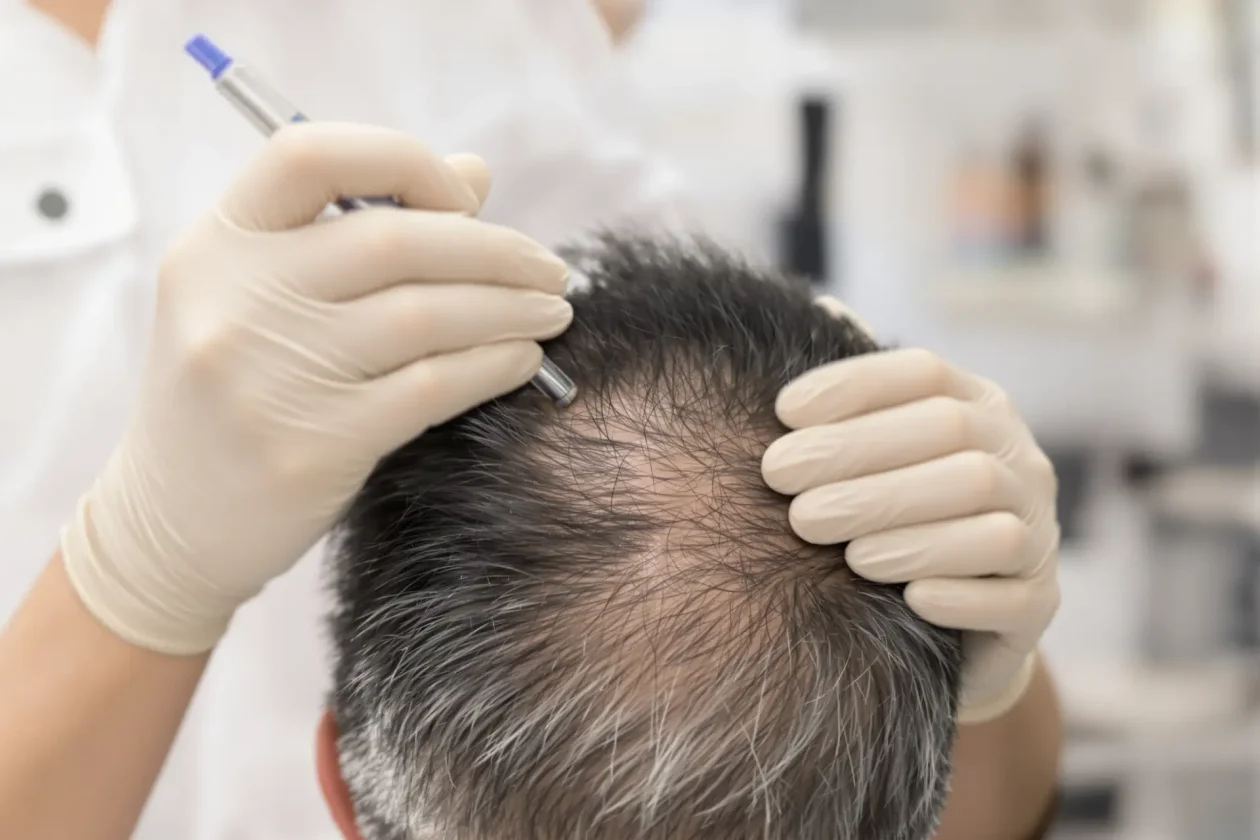
A FUE hair transplant London procedure can restore sparse areas while maintaining a natural appearance. Nevertheless, the process of obtaining convincing results entails more than merely relocating hair from one region of the scalp to another. The final outcome’s natural appearance is influenced by the planning process, hairline design, graft placement, donor hair management, and aftercare.
Commonly referred to as FUE, follicular unit extraction is a hair restoration method that involves the extraction of individual follicular units from a donor area and their subsequent implantation into areas susceptible to hair loss. The recipient area can be designed with a high degree of precision due to the fact that the grafts are transferred separately. This renders a FUE hair transplant London treatment appropriate for individuals who prefer a gradual, inconspicuous enhancement over a stark or synthetic transformation.
Comprehending Hair Restoration That Is Natural-Looking
Natural hair does not grow in a perfectly straight line or at the same density across the scalp. The hairline typically contains finer, shorter hairs, while thicker follicular units are observed in the area beyond it. Hair also develops in a variety of directions and at varying angles, which results in texture and movement.
The objective of a successful FUE hair transplant London procedure is to replicate these attributes. The objective is not merely to cover every visible area with the maximum number of grafts. Rather, the treatment should be tailored to the patient’s facial features, existing hair, and anticipated future hair loss pattern.
A natural outcome should appear appropriate when observed closely and immediately following styling. It should not result in an excessively low or sharply defined hairline; rather, it should blend in with the adjacent hair. The most favourable results are typically those that do not attract attention to the transplant itself.
Careful Hairline Design
Hairline design is a critical component of the FUE hair transplant London procedure. The hairline’s position, shape, and density can have a substantial impact on the face’s overall appearance, as it frames the face. A hairline that is positioned too low may appear unnatural and utilise a significant portion of the donor hair that is available. In contrast, a hairline that is positioned excessively high may not yield the anticipated improvement for the patient.
A design that is appropriate should consider a variety of factors. These consist of the patient’s age, facial proportions, forehead shape, existing hairline, hair characteristics, and family history of hair loss. It is also crucial to take into account the potential for hair to undergo changes over time. A design that appears acceptable in the short term may be less convincing if the hair in the adjacent area continues to thin.
A FUE hair transplant London plan will typically employ irregularity and variation, rather than establishing a uniform horizontal line. The front edge may be less dense and softer, gradually transitioning to thicker areas behind it. This simulates the appearance of hair that is growing naturally.
Comparing Hair Characteristics
The quality of a transplant outcome is partially determined by the degree to which the transplanted hair is consistent with the adjacent hair. Hair texture, colour, curl, and thickness can all influence the visual result. Wavy or curly hair may offer more coverage due to its increased volume, whereas very straight or fine hair may necessitate a high degree of precision in order to prevent visible gaps.
Therefore, it is imperative that the FUE hair transplant London treatment be customised to the patient’s unique hair characteristics. The quantity of grafts necessary will fluctuate based on the density of the donor hair, the extent of the thinning area, and the desired level of coverage.
The density of the outcome can also be influenced by the colour of one’s hair. Thinning may be less apparent when the contrast between the hair and scalp is smaller, whereas gaps may be more apparent when the contrast is greater. The most suitable graft distribution and overall treatment approach are determined by these considerations.
Placing Grafts at the Appropriate Angle
Implanted grafts’ direction and angle are essential for obtaining a natural appearance. Hair that is already present on the cranium does not grow in a straight line. It is typically positioned at a specific angle, with variations in direction around the hairline, temples, crown, and other areas.
Grafts should be positioned in accordance with the recipient’s natural growth pattern during a FUE hair transplant London procedure. The hair may fail to blend with adjacent growth, point in an unusual direction, or stand up if they are implanted at an incorrect angle.
The angle may also fluctuate depending on the location that is being treated. The hair at the front of the cranium frequently grows in a forward direction, while the hair around the crown follows a swirling pattern. These modifications necessitate meticulous implementation and meticulous planning. The appearance of the hair when it is dry, wet, or styled can be influenced by even minor changes in direction.
Utilising Single-Hair Grafts at the Front
Follicular units are naturally composed of varying numbers of hairs. Some have only one hair, while others have two, three, or occasionally more. The smallest units are typically the most appropriate for the front margin of the hairline, as they establish a gentler transition between the forehead and the denser hair behind it.
These single-hair grafts can be strategically placed at the leading margin of a FUE hair transplant London procedure, with larger follicular units positioned further back. This arrangement assists in the replication of the progressive increase in density observed in a natural hairline.
A harsh or plug-like appearance may result from the use of larger grafts in close proximity to the front. Conversely, the placement of single-hair transplants throughout the entire recipient area may not ensure adequate coverage. Consequently, the distribution must be balanced in accordance with the patient’s objectives and the available donor supply.
Gradual Density Management
The density of natural hair varies throughout the cranium. The region behind the hairline is typically denser, while the hairline is typically lighter and finer. These progressive progressions should be reflected in the FUE hair transplant London treatment, rather than a uniform density being applied all over.
The front edge may be treated with a lighter arrangement, while grafts can be arranged more closely together in areas where stronger coverage is required. This results in a graduated effect that can appear more realistic as the transplanted hair develops.
The patient’s donor area will also influence the intended density. The availability of follicles is limited, and the number of grafts used in a single procedure may limit the options for future treatment. In the event that additional hair loss occurs in the future, conservative planning can assist in the preservation of a harmonious appearance.
Preserving the Donor Area
The condition of the donor area is just as important as the appearance of the recipient area in order to achieve a natural-looking transplant. The process of FUE entails the extraction of individual follicular units, typically from the back and sides of the cranium. A visible thinning or unevenness may result if extraction is excessively concentrated in a single section.
The distribution of extractions throughout the donor area should be meticulously scheduled in a FUE hair transplant London procedure. This is especially beneficial when the hair is cut short, as it can help maintain a consistent appearance. The extraction pattern should consider the patient’s hair density, scalp characteristics, and potential need for future procedures.
Donor hair must be regarded as a finite resource. The current outcome and future options may be compromised by the removal of an excessive number of grafts. Consequently, a practical treatment plan should prioritise the most conspicuous areas and optimise the utilisation of grafts.
Providing Time for Development
A FUE hair transplant London result can appear natural due to the incremental progression of the transformation. The transplanted hairs typically shed after the procedure before new growth commences. Although this may be unexpected, shedding is a common component of the typical growth cycle that occurs after implantation.
The growth of new hair is not immediate. Small, fine hairs may be present in the initial stages, which are followed by a gradual increase in coverage and thickening. Growth may not occur uniformly across all areas, and the ultimate appearance can take many months to develop.
It is advisable for patients to refrain from making premature judgements regarding the outcome. The appearance may be influenced by temporary redness, swelling, scabbing, and asymmetrical growth during the recovery process. The healing process can be facilitated by adhering to the maintenance instructions and attending the recommended reviews.
Following the Aftercare Instructions
The protection of newly implanted grafts is significantly influenced by aftercare. Patients may be advised to follow specific cleansing instructions, refrain from rubbing or scratching the treated area, and restrict strenuous activity for a brief period. The precise guidance will be contingent upon the procedure and the unique circumstances of each individual.
Sun exposure may also be a factor to consider during the healing process of the epidermis. Protecting the area in accordance with the guidance of a professional may facilitate recovery and alleviate irritation. Patients should also deliberate on the appropriate timing for resuming the use of styling products, swimming, exercising, or wearing hats.
The intended appearance of a FUE hair transplant London treatment cannot be achieved if the grafts are not safeguarded during the early healing period. While certain aspects of recuperation are inevitable, meticulous postoperative care can mitigate unnecessary disruption.
Upkeep of Current Hair
A transplant can restore hair in specific regions; however, it does not necessarily prevent untreated hair from continuing to thin. This is especially pertinent for individuals who are experiencing progressive pattern hair loss. The transplanted area may appear less integrated if the adjacent hair becomes thinner over time.
Patients should engage in a conversation regarding the probable progression of their hair loss prior to undergoing a FUE hair transplant London procedure. It may be necessary for a treatment plan to take into account both the current thinning and potential future changes. Preserving a balanced outcome may necessitate maintaining the surrounding hair, when applicable.
Professional guidance may involve the discussion of appropriate treatments for existing hair or the monitoring of hair loss over time. Patients should not presume that a hair transplant will resolve all stages of hair loss. Maintaining a natural appearance frequently necessitates long-term planning.
Establishing Realistic Expectations
The FUE hair transplant London procedure has the potential to enhance hairline definition, coverage, and confidence; however, it is not without its drawbacks. The final density will be contingent upon the patient’s therapeutic response, the extent of hair loss, the quality and quantity of donor hair, and the characteristics of the existing hair.
In order to attain their desired level of coverage, certain individuals may require multiple procedures. Rather than endeavouring to restore all areas to their former density, some individuals may find it advantageous to concentrate on the hairline. Patients are able to make more informed decisions when they are aware of these constraints.
The densest possible result is not always the most natural result. A transplant that is well-designed should be consistent with the patient’s facial features, age-appropriate, and proportionate. It should also continue to be feasible in the event of additional hair loss in the future.
Selecting an Appropriate Treatment Plan
Before making a decision, it is recommended that individuals who are contemplating a FUE hair transplant London undergo a comprehensive evaluation. This evaluation should evaluate the quality of the donor area, the condition of the scalp, the pattern and cause of hair loss, and the likelihood of future changes. It should also offer an opportunity to address potential hazards, expectations, and recovery.
Enquiries regarding hairline design, graft numbers, placement angles, and long-term planning can assist in determining the suitability of the proposed approach. Patients should exercise caution when encountering guarantees that guarantee a specific density or ultimate appearance, as individual results may differ.
In the end, a natural-looking outcome is achieved by customising the treatment to the individual, rather than applying a uniform design to all. The outcome is influenced by the following: meticulous planning, precise graft placement, the prudent use of donor hair, and patience during the recovery process.
A FUE hair transplant London treatment can result in a subtle and convincing improvement when it is implemented as a long-term hair restoration strategy. Patients can enhance their coverage while maintaining a balanced appearance by emphasising natural hairline design, appropriate density, correct growth direction, and meticulous maintenance.