Preparing Your Home for a Roof Replacement
A roof replacement is no different from other home repairs that can be annoying. Getting a new roof is a good investment that will protect your home for many years, but the work will require supplies, tools, workers, and a lot of activity around your home. When you know what to expect, the process can seem a lot easier to handle.
Before work starts, one of the main things people want to know is how long the disruption will last. The size and shape of the house, the state of the roof, the materials being used, and the weather are some of the things that affect the answer. While some roof replacement jobs can be finished in a few days, bigger or more difficult jobs may take a lot longer.
It is important to keep in mind that the project’s length and the work that causes the most trouble are not always the same. Some parts of the roof replacement may make a lot of noise and activity, while other parts may not be too noticeable.
What is the typical time frame for a roof replacement?
There is no one set amount of time that all roof replacements must be done in. A fairly simple roof on a smaller house could be finished in a few days, as long as the weather stays nice and no problems come up out of the blue. The length of time can be longer if the property is bigger, the roof is more difficult, or the structure underneath needs a lot of work.
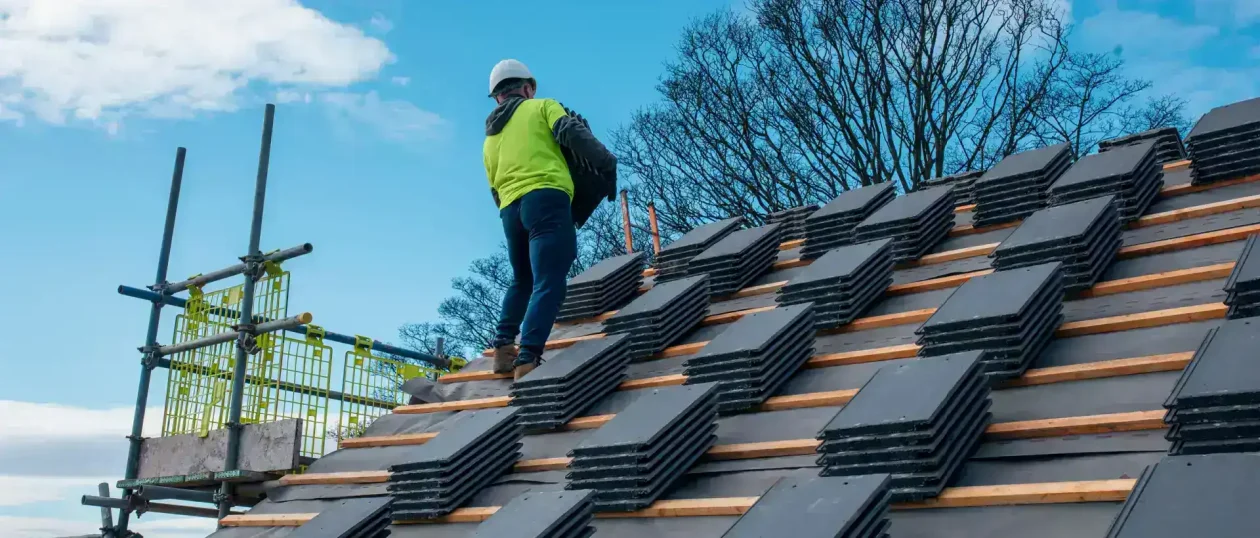
Getting the work spot ready and setting up the tools needed to do the job safely is often the first step. This could include things like platforms, safety covers, and places to store things. This planning may only take a short time, but it may affect how you use some of your property for a while.
After that, the old roofing materials need to be taken off. At this point in the roof replacement process, old tiles, slates, or other materials may need to be lifted off the roof and lowered or moved away. This can make the area noisier.
After the old roof covering is taken off, the state of the structure below can be checked. If there is broken wood, insulation, or other parts that need to be fixed, more work may need to be done before the new roof can be put on.
After that, the installation may happen in more than one step. After the finishing touches have been made and the new roofing materials are in place, the site can be cleaned up and the scaffolding taken down.
What part of the job doesn’t work well?
For many people, the most obvious thing about a roof replacement is the noise. Taking away old materials, moving tools, and putting on new roofing parts can make noises that people may hear more clearly inside the house than they thought.
During the day, the noise level can change. There may be times when workers are moving things around or working very hard, followed by times when things are quieter and more detailed work is being done.
Some of the most annoying parts of the process are the removal steps. Depending on how the current roof is built, this may require moving across the roof more than once and taking away a lot of material.
A roof replacement can also cause problems outside the building for a short time. Delivery trucks may need to be able to get in and out, supplies may need to be stored safely, and trash may need to be taken away. This could hurt driveways, gardens, paths, or other places close to the house.
What takes place in the beginning?
When a roof replacement starts, it can be easy to spot because the house is being turned into a temporary worksite.
Some parts of the building may have scaffolding put up around them, and safety measures may be put in place to help protect the property and the areas around it. Things like tools and materials may show up before the main work starts.
Once the roof replacement process begins, the first big job is usually taking off the old roof covering. This is probably going to make the most noise and activity.
This time of year can be hard for people who work from home. Activity above can make it hard to focus, talk, or meet with other people. Families with young children may also be able to hear the noise, especially when people are working hard.
It can make a big difference to plan around this time. Setting up important meetings, quiet work times, or other activities away from the property can help you handle the disruption better if you can.
How bad weather can change plans
For roof replacements in the UK and other parts of Europe, the weather is a big deal. When it’s safe to do certain jobs can be affected by things like rain, high winds, and other bad weather.
As a result, if bad weather disrupts the plan, a roof replacement might take longer than expected. This doesn’t always mean that there is a problem with the project. Some parts of roofing work just can’t be done safely or properly when the weather isn’t right.
The weather can also change the way people work each day. Depending on the circumstances, a project may start later, end faster, or stop for a while.
Because of this, it is better to think of the expected length as a range of days rather than a set number of working days. If the roof replacement takes longer than planned, don’t be too upset about it. Plan with some flexibility in mind.
Do you need to leave your house?
During most roof replacements, homeowners can stay in their homes. But whether this is possible relies on how much work needs to be done and how the household is set up.
The land may still be fully usable, but there may be a lot of noise when people are working. There might also be short-term restrictions around some areas, especially if there is equipment, materials, or scaffolding there.
It might be best to find another way to do at least part of the job if someone in the family works from home, has very sensitive working needs, or needs a quiet place to be during the day.
Although a roof replacement is typically not a reason to leave the property, each job is unique. Homeowners should talk about any worries they have before the work starts so that solutions can be found.
What about pets and kids?
Family routines may be impacted by a roof replacement. Kids might be interested in what’s going on around the house, but they should stay away from work areas, tools, and things that are being stored.
Pets can respond in different ways to sounds and activities that are new to them. Some animals, like dogs and cats, can get scared when there are loud noises, people moving around the property, or changes to their normal environment.
During busy times, it might be best to keep pets inside or in a safe place away from the work area. Keeping to routines that you know can also help you feel less stressed.
Remember that the scaffolding and other tools can stay on the property even when no one is working there. During the roof replacement, kids and pets should not be in these areas.
What kind of noise should you expect inside?
People who own their own homes sometimes think that the work on the roof won’t affect the inside of the house much. Most of the action is happening outside, but you can still hear and feel some of it inside.
How big it is depends on how the house was built and what kind of work is being done. Taking away old materials can make a lot of noise, but careful installation work might make less.
Even with safety steps in place, there may also be some dust or small pieces of debris. Proper steps should be taken to protect the property during a full roof replacement, but people may still want to cover or move especially fragile or valuable items in the areas right under the work.
When the job is done, the property may need to be cleaned up both inside and out. This should be a part of the planning process as a whole.
Could trouble with the roof replacement take longer than planned?
Finding a problem that wasn’t there before the old roof was taken off is one of the main things that can make a roof replacement take longer.
For instance, it might not be clear that the wood or other parts below are harmed until the old covering is taken off. Taking care of these kinds of problems can add time to the project because the main problem has to be fixed before the new roof can be finished properly.
It’s possible that older homes will have more unexpected problems, especially if they’ve been fixed up or changed in the past.
Finding out you need to do more work can be annoying, but fixing problems the right way during a roof replacement may be better than hiding them and not fixing them.
Organising your home around your job
A roof replacement can be a lot easier to deal with if you plan ahead. Before the work begins, you should think about what parts of the property might be affected and whether you need to change how you normally do things.
Finding other places to work during the noisiest times is important if you work from home. If you have kids, think about how the tools or scaffolding might affect things like school runs, playing outside, and other activities.
You might also want to move your cars if they will make it hard to get to your driveway. To make a safe place to work, outdoor chairs, plant pots, and other things might need to be moved around for a while.
You should also be ready for the fact that the roof replacement might take longer than you thought. It can be very helpful to have a flexible plan in case the weather or unexpected repairs stop you from making progress.
When does the trouble begin to go away?
As soon as the main building work is done, the most noticeable problems tend to go away. After the new roof covering is put on, there may still be things to do like finishing touches, checking the work, cleaning up, and taking away the tools.
Depending on how the job is set up, the scaffolding may stay up for a while after the main roof replacement work is done. For this reason, the house might not look like it did before right away, even after the roofing work is done.
It can make a big difference once the site has been cleared. The noise, movement, and temporary limits are gone, and the finished roof is now in place.
Is the trouble worth it?
A roof replacement will cause some problems in the short term, but for most homeowners, the long-term benefits are more important. A roof is one of the most important parts of a building that keeps it safe, and replacing an old or broken roof can give you more security and peace of mind.
The important thing is to go into the job with realistic goals. A roof replacement is a big building job, so there will be some noise and mess. But knowing when the noisiest parts are likely to happen, getting your home ready, and being flexible can make the experience a lot easier.
In the end, the length of the disruption will rely on the property and how hard the work is. For example, a simple job might only take a few days, but a bigger or more complicated roof replacement might take longer.
Homeowners can keep their daily lives as normal as possible by planning ahead and knowing the different stages. Noise, equipment, and temporary changes to the property may be annoying, but they are usually only there for a short time as part of a project that will give you a strong roof that will last for years.